
Disasters are unpredictable, and without the proper coverage, they can cause devastating financial losses for your company. That’s why business hazard insurance is critical for safeguarding against a wide range of potential hazards. From fires to vandalism and everything in between, hazard insurance ensures that your company is financially equipped to deal with damages and inconveniences caused. To understand why this coverage is important for your organization, let’s examine five frequent disasters covered by business hazard insurance.
Business Hazard Insurance for Fires
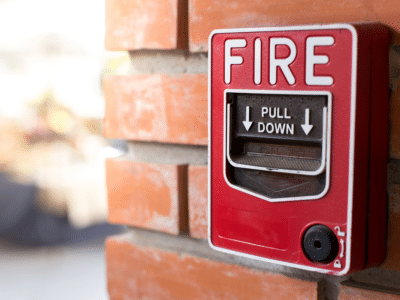
Fires are one of the most serious hazards that any business can face. Not only do they pose a threat to employees’ physical well-being, but they also have the potential to cause irreparable damage to facilities, documents, technology, and really anything else in their path. Fires are caused by a variety of circumstances including:
- Electrical Issues
- Cooking Accidents
- Wildfires
- Chemical Accidents
- Smoking
- And much more…
When it comes to dealing with the aftermath of a fire, business hazard insurance provides coverage for things like:
- Structural repairs and rebuilding.
- Replaces destroyed or damaged inventory.
- Provides coverage for lost wages during the interruption.
Take the state of California for example. In a region that is known for its frequent wildfires, business hazard insurance is a must. While damage from natural disasters, in the aftermath of these events, businesses with sufficient protection will be able to start rebuilding, while the owner’s with no coverage may not be able to recuperate their losses.
Business Hazard Insurance for Storms
Storms and severe weather come in a number of forms, all of which can be extremely damaging to businesses and their property. Such events include windstorms, tornadoes, hail, snowstorms, and
more. During these unfortunate events, businesses face risks like structural damage, broken windows, loose debris, and erosion. While we suggest that all organizations invest in business hazard
insurance, it’s particularly important if your company is in a storm-prone area. In these cases, be sure that the policy includes some sort of comprehensive storm coverage.
In the event of a damaging storm, business hazard insurance usually covers:
- Structural damage caused by winds and hail.
- Broken windows, signage and roofs in need of repair.
- Lost wages and other expenses caused by business interruption.
Business Hazard Insurance for Water Damage
Water damage can be catastrophic to businesses and while you should do everything possible to avoid these situations, sometimes they’re out of your control. While all policies vary, most business hazard policies cover claims involving water damage caused by leaks or burst pipes.
It’s important to note that business hazard insurance usually DOES NOT cover flood damage caused by rising water from hurricanes or extreme rain. For these circumstances, a separate flood insurance policy should be considered. Having a specialized flood insurance policy working in tandem with your business hazard insurance, ensures complete protection from all water-related incidents. With all that said, when it comes to water damage, be sure to read the fine print of your policy to understand what’s covered and what isn’t.
Business Hazard Insurance for Lightning Damage
Lightning strikes can cause significant harm to your business. Common damages caused by lightning include burn damage (if the lightning starts a fire), as well as damage to electrical systems and other equipment. The latter generally happens when a power surge takes place, which can affect any electrical infrastructure. Luckily, most business hazard insurance policies protect against lightning damage. In these scenarios, your policy should help to cover:
- Damaged equipment
- Structural damage
- Wages and expenses caused by the business interruption.
Lightning strikes are unpredictable and can happen anywhere, so it’s important to have a comprehensive protection plan in place. In the aftermath of a damaging lightning strike, business hazard insurance will help your organization to recover quickly without facing large out-of-pocket expenses.
Business Hazard Insurance for Vandalism and Theft
While most of the hazards we’ve discussed involve the weather, remember that not all risks come from natural disasters. Unfortunately, two of the most common business damages are theft and vandalism. When we talk about theft and vandalism, it usually refers to goods being stolen, property being damaged, or defaced in some way. In most cases, business hazard insurance will protect against such incidents by covering:
- The repair costs of vandalized property.
- The replacement costs of stolen inventory or goods.
- The costs of security upgrades to help avoid future issues.
Protect Your Company From The Unexpected
Whether it’s a fire, tornado, break-in, burst pipe or power surge, business hazard insurance will protect your organization from financial ruin. Without adequate protection these distatars can
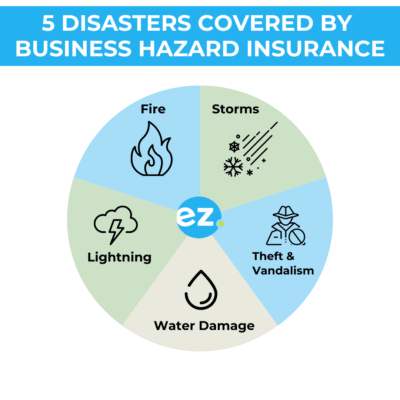
result in huge out-of-pocket expenses, or the need to shut down for an extended period – both of which could destroy your business. When considering your needs in relation to business hazards, it’s important to understand what you’re already covered for. Then, based on a variety of risk factors such as the nature of your business and your geographic location, consider adding on additional protection.
Don’t wait for disaster to strike. Instead, be prepared and get a free quote from EZ.Insure. Our easy-to-use comparison platform allows you to view competing plans side-by-side, ensuring that you find something that matches your budget and needs. We also have a library of articles, all aimed at helping business owners save money and stay protected. So what are you waiting for? To get your quote just enter your ZIP code at the top of this page, or call us at 855-694-0047.
 Your underwriter will use all of your data and information you send to plug into an equation to figure out the premium. To start you’ll submit a statement of values (SOV) to your insurance company. A SOV is a thorough list of your assets that your insurance company will use to figure out how much it would cost to replace all of your business’s property and equipment. The total sum of your SOV is now added to your expected business income for the upcoming year. Giving you your total insurable value (TIV).
 Property Construction
 You know that saying, “location, location, location”? It doesn’t just mean pick a busy area with potential customers, it also means pick a safe area. Your insurance company looks at every possible risk, and we do mean every single one. Any possible risks in the area that your business is located heavily impacts your premium. Risks can include the crime rate, how often natural disasters happen in that area, your proximity to oil plants or businesses that use flammable materials. Location doesn’t just negatively affect your premiums, it can also lower them. Your commercial property insurance can go down if your business is close to places where emergency services are readily available. Such as a fire or police station or even just a fire hydrant. Your business being near emergency personnel means it’s more likely they’ll respond quickly and minimize the damage compared to a business that operates further away.


 We know CPPs sound like BOPs, but they’re vastly different. The fact that BOPs and CPPs are insurance bundles is clearly the most important item they have in common. That is, they are made up of numerous policies. And purchasing them as a package is less expensive than purchasing each of them separately. The primary difference is that the insurance plans that come with a BOP are often predetermined and limited. Insurance companies recognize that general liability, property, and business interruption are policies that the majority of small businesses require, regardless of industry, which is why they opted to package them as a BOP.
 What Isn’t Covered?
 One of the key features of a CPP is that businesses can tailor their coverage by adding a variety of riders to the package. Naturally, the more types of coverage you include in your CPP, the higher the cost. Aside from how many supplementary coverages you add to your CPP and how complex your coverage is, insurers will consider various aspects to determine how much you will have to pay for your CPP, including:
 Number of Employees
 Keeping your business’s doors open depends on a number of factors. But it’s clear that maintaining your business’s property and equipment is a huge part of that. If these assets are damaged in a fire or natural disaster, it might be difficult for your business to recover. So, you need to protect them.

 The Internal Revenue Service considers business insurance premiums to be an ordinary and necessary business expense. So, yes it can be tax deductible. But there are other factors to think about when determining if your hazard insurance is tax deductible.